
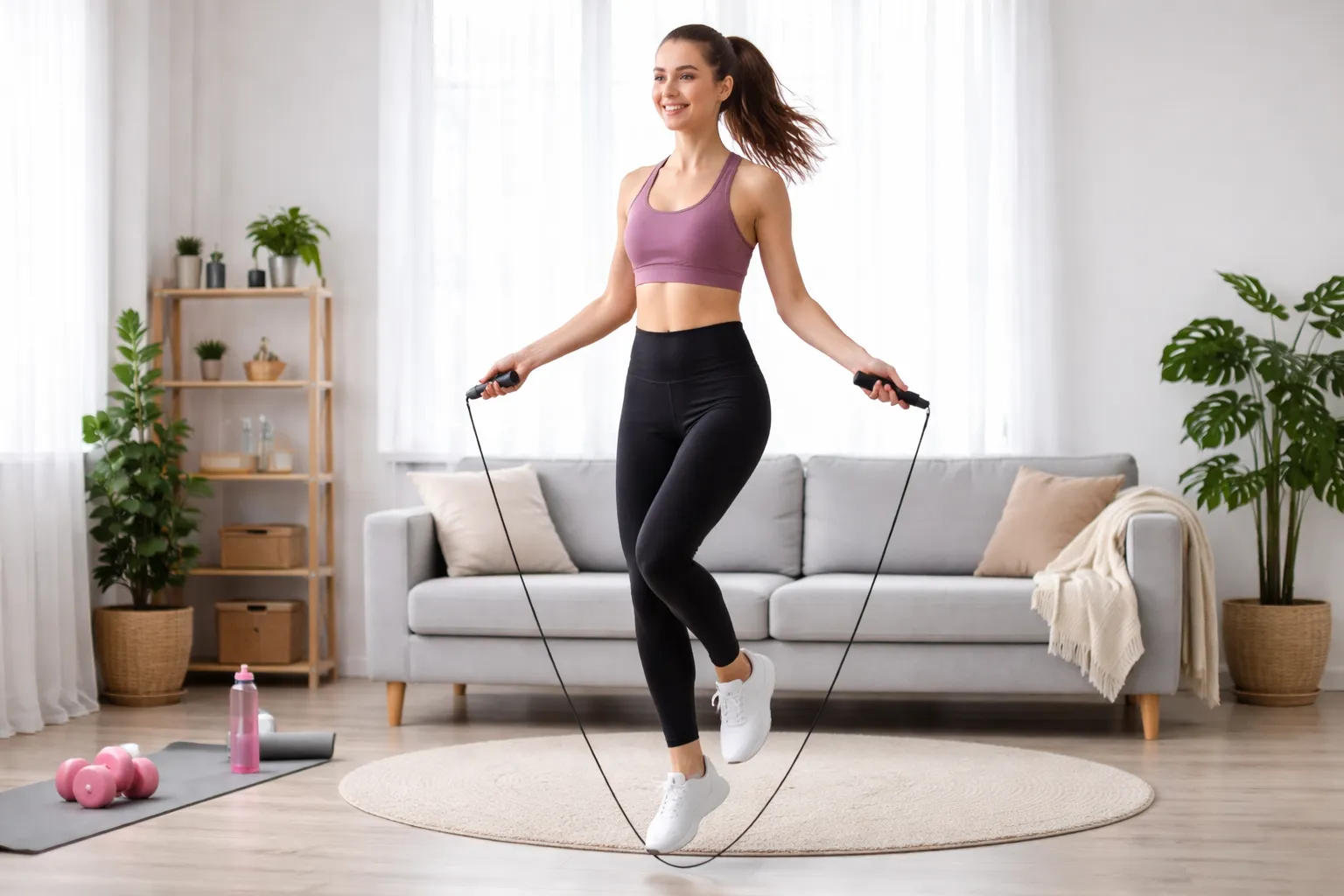
Hi there! I'm Alex, and I've been teaching fitness for over ten years. I've helped hundreds of people start their fitness journey, and one of my absolute favorite tools is the simple jump rope. If you're thinking about starting a jump rope workout for beginners, you are in the right place. I'm here to guide you through every step, just like I do with my clients in person. It's fun, it's effective, and I promise, you can do it.
I remember when I first started. I tripped over the rope more times than I could count! But that's the whole point of this guide. I want to share everything I've learned—the easy ways to start, the common mistakes to avoid, and the simple routines that build real skill. This isn't just theory; it's what I practice and teach every single day.
So, grab a water bottle, and let's get started on your new adventure.
Why a Jump Rope Workout for Beginners Is a Perfect Start?
It may seem that only boxers or children at the playground use jumping rope. However, I deploy it when working with all my novice clients, and the following are the reasons why. It’s a powerhouse of benefits. To begin with, it is wonderful to the heart. It fastens your blood. Second, it is an excellent workout for the entire body. Your legs kick you out of the ground, your back makes you look steady, and your hands and shoulders rotate the rope.
It is also useful in coordination and timing. In the beginning, your hands and feet may not seem to be talking to one another. That's totally normal! They will make the best friends after a few practices. And it is one of the most effective exercises that burns calories. You can lose as many calories in 10 minutes as jogging for 30 minutes.
The best part? It's simple and affordable. You do not have to have an expensive gym membership. You only require a rope and a fraction of the area. This is what makes a novice jump rope workout so available to all.
Choosing Your First Jump Rope: Don't Overcomplicate It!
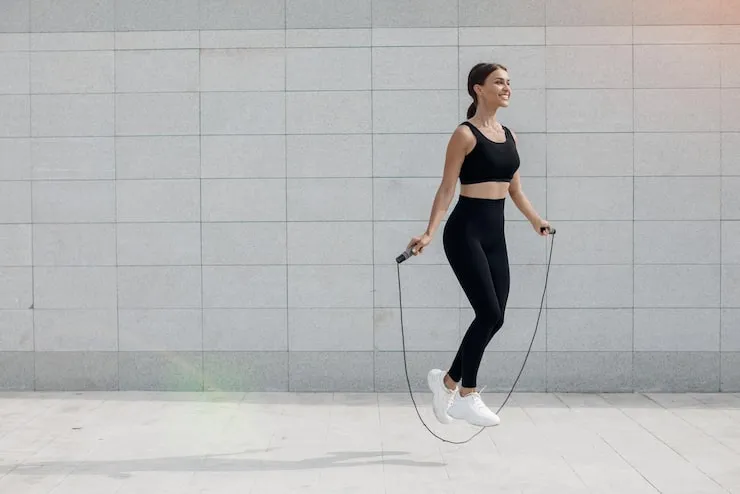
Entering a sports store is intimidating. There are so many ropes! Let me make it easy for you. To start with the simple training of jumping rope, you just require a simple adjustable rope.
This is my professional advice regarding the length. Place one foot at the center of the rope. Lift the handles up to your chest. When they get to your armpits, the size is just right in case you are a novice. When they pass way over your shoulders, they are too long. When they just get to your chest, then it is too short.
A beaded or PVC rope is a good place to begin. It is heavier a bit, and thus you can feel it swinging round you. The feedback will assist your brain to learn timing. And you can always move up to a speed rope. At this point, we are only trying to gain confidence.
Your Pre-Jump Checklist: Safety and Setup
Since we are just starting our first set of a skipping rope workout like a beginner, we shall pre-plan our success. This is the ugh but very vital information I do review with my clients.
-
Shoes: Have cushioned sneakers. Cross-trainers or running shoes would be ideal. Do not jump in barefoot or sandaled.
-
Surface: Find a smooth surface. Wooden floor, rubber mat, or flat concrete is preferred. Do not use heavy carpet (which traps the rope) or even very hard floors such as lumpy asphalt.
-
Space: You must have plenty of space. Test the rope you have round your neck. You will need the area of some 3 feet of space on all sides.
-
Warm-Up: Never skip this! Do 2-3 minutes of light movement. March, circulars with arms, and a roll or two with ankles. It informs your body, saying, We are going to move!
You may also read :- Minimalist Skincare Routine for Combination Skin: Simple & Effective
Mastering the Basic Bounce: Your First Jump Rope Session
Okay, let's actually jump! We are going to begin without the rope. Trust me on this.
First, stand tall. Suppose that there is a rope hanging at the head. Keep your hands straight at the hips level, like you were holding the handles of a rope. And now simply step lightly with the balls of your feet. Hop, hop, hop. Get a gentle rhythm going. This is what the easy jump rope exercise plan covers.
Now, let's add the rope. Hold a handle in each hand. Place the rope behind the heels. Get the rope over your head with your wrists, not your entire arms! When it approaches your feet, make that little hop that you just practiced.
You might miss. That’s 100% okay! I still miss sometimes. Just reset and try again. Goal: 30 seconds of attempts, take a 30-second break. This initial jump rope program is not aimed at 10 minutes of continuous jumping. It is to create the correlation between your hands and feet.
Building Your First Real Routine: A 10-Minute Beginner Jump Rope Plan
After getting to be able to jump 10-20 jumps in a row, you are prepared for a simple structure. The following is a low-impact jump rope workout that I provide to all my new clients. We train with intervals, and this implies that we alternate between jumping and rest.
0-2: Warm-up (marching, arm circles)
-
Minutes 2-4: Practice jumps. Jump 20/rest 40/jump 20/rest 40. Repeat 3 times.
-
Minutes 4-8: The Work Set. 30 seconds of jumping followed by 30 seconds of rest. Repeat 4 times.
-
Minutes 8-10: Cool-down. Jump slowly or march for 1 minute, followed by a few leg stretches.
See? It is just 10 minutes all in all, and half of it is rest! It is an environmentally friendly method of developing your jump rope stamina to begin with. The higher you get, the higher the jump time and the lower the rest time you can decrease.
Fun Variations to Try (Once You're Comfortable!)
The rudimentary bounce can never be tired of. However, when you are ready to shake it up, the following are some simple follow-up steps. These will make it fun and a little more difficult to coordinate.
-
The Alternate Foot Jump: This is like the Alternate Foot Jump except that you use one foot at a time instead of both feet. Many individuals feel more comfortable with it.
-
The Heel Tap: This is done when you jump, but you tap one of your heels before you. Next jump, tap the other heel. It is cool looking and exercises your legs in a different way.
-
The Side Swing: It is not even a jump! Keep swinging the rope to your right side and left side of the body. It teaches you the swing of the rope and is a wonderful rest of motion.
These, combined with one or two of your basic rope-jumping exercises, will keep your mind occupied, and you will not realize how quickly your workout is over.
Mistakes I See All the Time (And How to Fix Them)
There are a few things that I observe holding beginners back in my years of coaching. We should correct them before they become habits.
-
The Leaping Overboard: It only requires that you should get out of the ground to the height necessary that the rope may pass—an inch or two. Leaping up is less work and more damaging to the joints.
-
The power is to be exerted by your wrists with big arm circles. Bend your hips, keep your hands at your hips, and keep your elbows close to your body. Visualize a wrist circle rather than an arm swing.
-
Looking Down: Your body is after your head. When you see your feet, you will stoop. Stare directly into something on the wall.
-
Getting Frustrated: This is the largest one. Everyone trips. It belongs to the process of learning. Get over it, restart, and repeat. Perfection is always outdone by consistency.
How to Stay Motivated and Track Your Progress?
Any exercise program is about remaining with it. This is what I do to make my clients keep up with their jump rope fitness program.
Set a simple goal. Perhaps it is I who will exercise my 10-minute routine 3 times a week. Put it on your calendar. Either use a notebook or a habit-tracking app.
Celebrate small wins! Then you have finally connected 50 jumps in a row? That's huge! Tell a friend. You are actually doing well in this cardio jump rope exercise. You will also see that your clothes can fit better, you have more energy, or that you are just happier after a session. Those are all wins.
Pairing Your Rope Workout with Other Activities
A beginner jump rope workout is an excellent core workout. However, to make the plan a balanced fitness plan, I would incorporate two other items.
To begin with, incorporate some low-intensity strength training two times a week. It may be exercises with bodyweight, such as squats, push-ups (with a wall is alright!), and planks. Fitter muscles also ensure that your joints stay safe by making it easier to jump.
Secondly, do not overlook stretching and recovery. 5 minutes of stretching your calf, hamstring, and shoulders after your jump rope sessions. During the off days, a nice walk or yoga is the best thing. It is your greatest instructor: listen to your body.
Ready, set, jump!
The best choice, which you can make in terms of health, is to start a jump rope workout as a beginner. It is happy, difficult, and very fulfilling. Here you have it all: the know-how, the plain and simple plan, and the tips on how to escape the usual pitfalls.
I began with a rope and a dream to get fitter, and it transformed my life. It can do the same for you. Don't overthink it. All you need to do is to lace on your shoes, sit somewhere, and jump the first. I’m cheering for you!
FAQs: Your Questions, Answered by a Real Coach
The following are some of the typical questions I receive during the initial stages of the rope-skipping exercise program from individuals.
Q: What is the frequency of a jump rope workout I need to perform?
A: I would suggest 2-3 days off a week, not consecutive. This allows your muscles and your joints time to rest. You can increase the number of days as you gain strength.
Q: My calves are really sore! Is that normal?
A: Absolutely. You have some new sort of work being done by your calf muscles when you first begin. Soreness is normal. Also ensure that you roll them right after exercising, and also roll them with a foam roller.
Q: I keep tripping on the rope. Am I just bad at this?
A: Not at all! The other trainer and I, Maria, say that it is not failure but data since we are tripping. Every journey informs you something more of your time. All individuals, even professional athletes, fall when they learn. Be patient with yourself.
Q: Will jump rope exercises help me to lose weight?
A: Yes, definitely. It is an excellent cardio exercise that helps in burning calories. To achieve maximum, I would always advise my clients to combine regular exercise (such as jumping rope) and healthy eating patterns. The combination is what brings permanent change.